Top 10 Text-to-Video AI Tools for Marketers 2026
Discover the top text-to-video AI tools for marketing 2026, ranked by features, pricing, and results, to create high-converting videos faster for campaigns.

Every marketer hits the same wall eventually: the campaign needs video, but production timelines refuse to cooperate. Briefs turn into bottlenecks, edits stretch for weeks, and momentum dies before the message ever reaches an audience. By 2026, this gap between ideas and execution will no longer be acceptable for modern marketing teams.
Text-to-video AI tools emerged because marketers needed speed without sacrificing narrative control or brand consistency. Instead of starting with cameras, crews, and timelines, these tools start with scripts, prompts, and intent. The shift isn’t about novelty; it’s about keeping campaigns moving while attention windows keep shrinking.
This guide breaks down the top text-to-video AI tools marketers are actually comparing in 2026. Not based on hype, but on how well each tool fits real marketing workflows and campaign demands. The goal is simple: help you choose tools that turn written ideas into usable videos faster and more reliably.
Key Takeaways
- Marketing videos fail when scripts jump straight to visuals without controlling story order, pacing, or message clarity.
- Text-to-video tools matter in 2026 because campaigns demand fast iteration without losing narrative consistency.
- Frameo translates written intent into scene-by-scene videos, keeping hooks, progression, and outcomes intentional.
- Marketers use Frameo to test multiple angles, formats, and messages without refilming or timeline-heavy editing.
- As text-to-video evolves, tools like Frameo win by helping teams design stories before generating visuals.
What Is a Text-to-Video AI?
A text-to-video AI is a system that converts written input into moving visuals using automated generation models. You provide text such as a script, prompt, or structured outline, and the tool produces video scenes, motion, audio, and timing based on that input. The output is not a static slideshow, but an assembled video sequence designed to play end-to-end.
Unlike traditional video software, text-to-video AI removes the need to manually design every frame or transition. It interprets language into visual actions, scene changes, and pacing decisions. The result is a faster path from written intent to watchable video, without filming, manual animation, or timeline-heavy editing.
What Marketers Actually Need From Text-to-Video Tools?
Marketers don’t approach text-to-video tools out of curiosity; they reach for them under pressure.
Deadlines are tight, channels are fragmented, and every video must justify its production cost.
What matters isn’t what the tool can do, but whether it fits into how campaigns actually run.
In real marketing teams, text-to-video tools are expected to:
- Turn written campaign ideas into usable video assets fast: Scripts, ad copy, landing page messages, or hooks should translate directly into video without rebuilding everything visually.
- Support iteration, not one-off creation: Marketers need to test multiple hooks, angles, lengths, and formats without starting from scratch each time.
- Maintain narrative and brand consistency across outputs: Videos should feel connected across ads, social posts, landing pages, and regions, even when generated quickly.
- Work across formats and placements: One idea often needs versions for short-form ads, social feeds, product pages, and internal sales enablement.
- Reduce dependency on specialist roles: Tools must be usable by marketers directly, without constant handoffs to editors, motion designers, or agencies.
- Fit into existing campaign workflows: The best tools adapt to how teams plan, approve, and deploy content, instead of forcing a new process.
Many creators already reduce turnaround time by building repeatable prompt systems, as shown in How Digital Marketers and Creators Are Saving Hours with AI and Automation.
Top 10 Text-to-Video AI Tools for Marketing (2026)
Top text-to-video AI tools differ widely in how much control, speed, and marketing readiness they actually offer. Some focus on quick visuals, others on narrative consistency, and only a few support campaign-level storytelling at scale.
Here are the top 10 text-to-video AI tools marketers are actively comparing for 2026, ranked by real-world marketing use cases rather than hype.
1.Frameo.ai
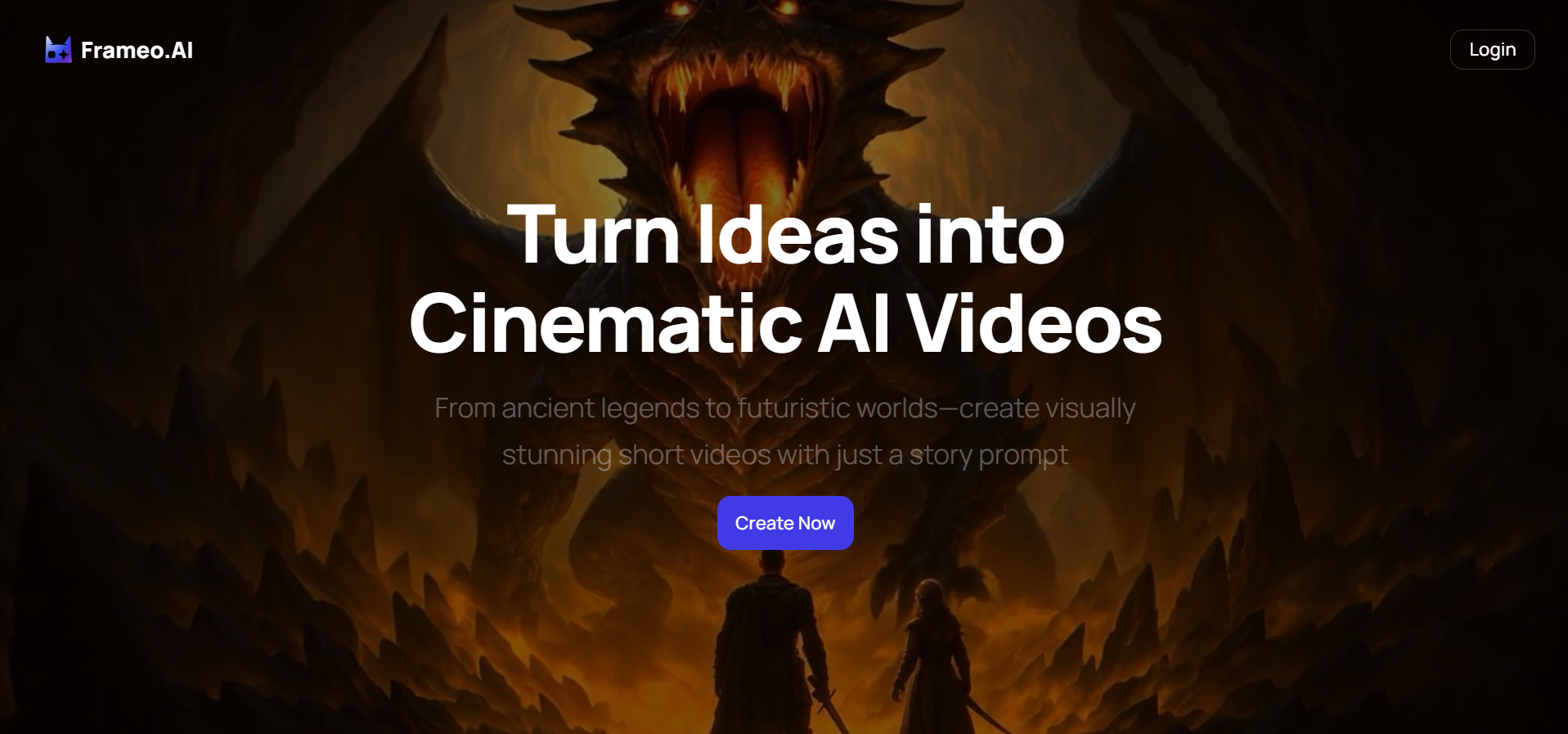
Frameo is a text-to-video platform built for marketers who need structured, story-first videos, not generic visuals stitched together. Instead of jumping straight from a prompt to a random clip, Frameo helps teams shape a narrative, visualize it scene by scene, and then turn it into a finished, campaign-ready video.
At its core, Frameo turns written intent into cinematic output. You start with a story prompt or script, define how the video should unfold, and guide characters, scenes, and pacing before anything is rendered. This makes it especially suited for ads, explainers, product stories, and branded content where sequence and clarity directly affect conversion.
Key capabilities marketers use in practice:
- Prompt-to-Video Story Flow
Enter a story idea or script, and Frameo generates a structured video rather than isolated shots. Each scene follows logically, helping ads and explainers feel intentional instead of fragmented. - Character Creation and Consistency
Marketers can design recurring characters, avatars, or product heroes that stay visually consistent across every scene. Appearance, expressions, outfits, and roles can be refined through simple text instructions. - AI-Generated Storyboards
Before final output, Frameo lays out a clear, shot-by-shot storyboard. This allows teams to review pacing, scene order, and visual emphasis early, reducing rework later. - Audio-Driven Video Creation
Voiceovers, podcast clips, or music tracks can be uploaded, with Frameo generating synced visuals, captions, and scene transitions around the audio automatically. - Scene, Camera, and Composition Control
Users can adjust backgrounds, camera angles, framing, mood, and visual style without touching editing software. Changes happen at the prompt level, not the timeline level. - Product and Marketing-Focused Layouts
Frameo supports product-led videos built from images or descriptions, with layouts optimized for ads, demos, and short-form marketing placements. - Vertical-First Output
Videos are rendered in 9:16 by default, making them immediately usable for TikTok, Instagram Reels, YouTube Shorts, and paid social placements.
Why marketers choose Frameo over generic text-to-video tools:
- Produces narrative-driven videos, not disconnected visuals
- Reduces production time while preserving creative control
- Makes iteration easy when testing hooks, messages, and formats
- Works well for teams producing high volumes of campaign videos
- Fits modern marketing stacks without requiring filming or complex editing workflows
For marketers who care about how a video unfolds, not just how fast it’s generated, Frameo functions less like an AI effect generator and more like a visual storytelling engine built for real campaigns.
2.HeyGen
HeyGen is a text-to-video tool primarily built around AI avatars and talking-head videos, making it popular for explainers, internal communications, and quick marketing updates. Marketers typically use it when they need a human-presenter format without filming real people.
Where HeyGen works well for marketing:
- Fast creation of avatar-led videos from scripts
- Large library of AI presenters and multilingual voice options
- Useful for training videos, product walkthroughs, and announcements
- Supports quick localization for global campaigns
Limitations marketers often run into:
- Videos are mostly presentation-style, not cinematic or story-driven
- Limited control over scene progression and narrative flow
- A repetitive visual format can feel generic in ads and social feeds
- Less flexibility for brands wanting character-based or visual storytelling
HeyGen is effective when clarity and speed matter more than creative structure. For marketers focused on storytelling, ad performance, or visual differentiation, it’s often used as a utility tool rather than a core creative platform.
3.Synthesia
Synthesia is a text-to-video platform centered on studio-style AI presenters, commonly used for corporate marketing, onboarding, and instructional content. It’s chosen when brands need consistency, clarity, and scale across many videos.
Where Synthesia fits well for marketers:
- Reliable script-to-presenter videos with clean delivery
- Strong enterprise features for teams and approvals
- Broad language and accent support for localization
- Useful for internal marketing, demos, and educational campaigns
Where it falls short for growth-focused marketing:
- Visual format feels formal and repetitive for social platforms
- Limited storytelling depth beyond the presenter + background
- Minimal creative control over scenes, pacing, or narrative tension
- Less effective for ads, short-form reels, or brand storytelling
Synthesia works best when the goal is information transfer at scale. Marketers focused on engagement, emotional pull, or scroll-stopping visuals usually pair it with more creative-first tools.
4.Pictory
Pictory is built for turning long-form text into short marketing videos, especially blog posts, scripts, and summaries. It’s often used by content marketers repurposing written assets into video quickly.
Pros for marketers:
- Converts articles, scripts, and URLs into videos automatically
- Large stock media library for fast visual matching
- Simple captioning and highlight-based editing
- Useful for content repurposing at scale
Cons to be aware of:
- Limited control over scene logic and storytelling flow
- Visuals can feel generic or loosely connected to the message
- Not ideal for narrative ads or brand-led creative videos
- Less flexibility for character-driven or product-specific stories
Pictory works best when speed matters more than originality. It’s a solid option for distribution-heavy strategies, but less effective for campaigns that rely on strong narrative or visual identity.
5.Runway
Runway is a powerful creative tool used by marketers who want high visual control and are comfortable shaping videos through experimentation rather than rigid templates.
Pros for marketers:
- Advanced text-to-video and image-to-video generation
- Strong visual effects, motion tools, and scene manipulation
- Useful for experimental ads, brand films, and visual concepts
- Supports creative teams working on high-impact visuals
Cons to be aware of:
- Steeper learning curve compared to marketing-first tools
- Less optimized for direct-response or conversion-focused videos
- Requires more manual effort to maintain narrative clarity
- Not built around ad formats or marketing workflows by default
Runway suits marketers who prioritize visual experimentation and cinematic style. It’s less plug-and-play, but valuable when creative control matters more than speed.
6.Sora
Sora is a research-grade text-to-video model designed to generate realistic video clips directly from detailed written prompts. It focuses on simulating real-world motion, lighting, environments, and camera behavior rather than marketing formats or ad workflows. Marketers mainly use Sora to visualize ideas, explore speculative concepts, or prototype scenes that would be expensive to film.
Pros for marketers:
- Produces highly realistic motion and environments
- Strong for concept visualization and speculative campaign ideas
- Handles complex prompts involving physics, movement, and environments
- Useful for early-stage creative exploration
Cons to be aware of:
- Not production-ready for most marketing workflows
- No built-in tools for ads, social formats, or brand systems
- Limited control over repeatability and consistency
- Not optimized for campaign-scale output
Sora is best viewed as a creative research tool, not a marketing production platform.
7.Fliki
Fliki is a text-to-video tool that pairs scripts with stock visuals and AI-generated voiceovers. It’s commonly used by marketers who need fast explainer videos, faceless content, or narration-driven clips without on-camera talent. The platform emphasizes audio clarity and speed over cinematic storytelling.
Pros for marketers:
- Strong AI voice library with multiple tones and languages
- Simple text-to-video workflow for explainers and tutorials
- Works well for faceless content and informational videos
- Quick setup for non-design teams
Cons to be aware of:
- Heavy reliance on stock footage limits originality
- Minimal control over narrative pacing and scene logic
- Videos can feel generic across campaigns
Fliki works best when speed matters more than creative differentiation.
8.Lumen5
Lumen5 is designed to convert written content, blogs, articles, and landing pages into short videos automatically. It’s widely used by content and social teams that want to repurpose existing material into visual formats quickly. The platform leans heavily on templates and brand kits to maintain consistency.
Pros for marketers:
- Excellent for repurposing written content into video
- Brand kits help maintain visual consistency
- Simple drag-and-drop editing for social platforms
- Scales well for content-heavy teams
Cons to be aware of:
- Template-driven visuals limit storytelling depth
- Weak control over emotional pacing and scene intent
- Not designed for performance ads or narrative video
Lumen5 is ideal for content distribution, not campaign storytelling.
9.Veed.io
Veed.io is a browser-based video editor with AI-assisted features layered on top. It’s commonly used by marketers who already have footage and need to edit, caption, and format videos quickly for social platforms. AI helps with subtitles, cleanup, and basic enhancements rather than full video generation.
Pros for marketers:
- Strong captioning, subtitles, and formatting tools
- Easy editing for short-form social content
- Useful for polishing existing footage quickly
- Accessible for small teams and solo marketers
Cons to be aware of:
- AI generation is assistive, not core
- Limited automation for story-based video creation
- Requires manual effort for narrative structure
Veed.io fits editing-first workflows rather than prompt-to-video storytelling.
Text-to-Video AI Tools Compared for Marketing Use

Choosing a text-to-video tool isn’t about which platform has the flashiest demos; it’s about how reliably the tool supports real marketing workflows. Marketers care about narrative control, iteration speed, output consistency, and how easily videos adapt across campaigns and channels.
To make the differences clear, here’s a side-by-side comparison focused on how each tool actually performs in marketing contexts, not generic feature checklists.
Below is a practical comparison showing where each platform fits best.
Tool | Core Strength | Best Use Case | Narrative Control | Marketing Readiness | Key Limitation |
|---|---|---|---|---|---|
Story-first prompt-to-video system | Ads, explainers, product stories, branded shorts | High (scene, pacing, characters) | High (campaign-ready output) | Focused on structured storytelling, not casual editing | |
HeyGen | AI presenters and avatars | Explainers, announcements, internal videos | Low | Medium | Limited visual variety and story depth |
Synthesia | Studio-style presenter videos | Corporate, onboarding, training | Low | Medium | Formal look struggles on social platforms |
Pictory | Text-to-stock video conversion | Blog and content repurposing | Low | Medium | Generic visuals, weak story flow |
Runway | Advanced visual experimentation | Brand films, creative concepts | Medium | Low–Medium | Steep learning curve, manual workflows |
Sora | Realistic scene generation | Concept testing, visual ideation | Medium | Low | Not production-ready for campaigns |
Fliki | Script + AI voice videos | Faceless explainers, tutorials | Low | Medium | Stock-heavy, limited originality |
Lumen5 | Content-to-video automation | Social content distribution | Low | Medium | Template-driven, shallow storytelling |
Veed.io | AI-assisted video editing | Captions, formatting, polish | Low | Medium | Editing-first, not true text-to-video |
This shift toward story-first tools mirrors why many creators have changed platforms, as detailed in 5 Reasons Creators Are Switching to Frameo for AI Video Generation.
What stands out naturally is that some tools excel at presentation, others at experimentation, and others at repurposing. Frameo differs by sitting squarely in the middle of story structure and execution, which is why teams producing campaign videos often gravitate toward it without needing additional tools.
The Future of Text-to-Video AI
Text-to-video AI is shifting from novelty tools to core creative infrastructure for marketing teams. The focus is moving away from “impressive outputs” toward clarity, control, and repeatable results.
What this shift looks like in practice:
1.Story Design Comes Before Generation
Future tools will help creators shape intent, pacing, and structure before rendering any visuals.
This means:
- Defining the message and flow upfront
- Reducing trial-and-error generation
- Creating videos that feel intentional, not accidental
2.Structure Becomes More Important Than Speed
As the generation gets faster everywhere, structure becomes the real differentiator.
Expect more emphasis on:
- Scene sequencing and narrative flow
- Character and visual consistency
- Videos designed for ads, not demos
3.Creation Becomes Decision-First, Not Effect-First
The next wave of tools will guide thinking, not just visuals.
They’ll help marketers:
- Test hooks and formats early
- Adapt videos across platforms easily
- Build systems, not one-off assets
Text-to-video AI is maturing. The tools that last will be the ones that support how stories are planned, not just how they’re generated.
If you’re planning campaigns where story, pacing, and clarity actually matter, tools like Frameo.ai help you design videos before you generate them.
Explore how marketers use Frameo to turn written intent into structured, campaign-ready videos, without filming, heavy editing, or guesswork.
Conclusion
Text-to-video AI tools are no longer just shortcuts for creating visuals; they’ve become strategic choices that shape how marketing stories are planned, produced, and scaled. The difference between tools now lies less in generation speed and more in how clearly they support narrative flow, consistency, and campaign intent.
As marketing teams move toward higher output without sacrificing clarity, platforms that treat video as a structured storytelling system naturally stand out. When your goal is not just to make videos, but to make them work across ads, socials, and product messaging, choosing tools built around story-first thinking becomes a long-term advantage rather than a short-term convenience.
FAQs
1.What are text-to-video AI tools used for in marketing?
Text-to-video AI tools help marketers turn scripts, prompts, or ideas into videos for ads, social media, and campaigns. They reduce production time while making it easier to test formats, hooks, and messaging at scale.
2.Are text-to-video AI tools suitable for paid advertising?
Yes, many tools are used for paid ads, but effectiveness depends on narrative control, pacing, and format support. Tools built for story-first workflows generally perform better in conversion-focused campaigns.
3.How do marketers choose the right text-to-video AI tool?
Marketers should evaluate tools based on use case, such as ads, explainers, or content repurposing, rather than visuals alone. Control over structure, iteration speed, and platform-ready output usually matters more than effects.
4.Can text-to-video AI replace traditional video production?
Text-to-video AI doesn’t replace all traditional production, but it significantly reduces reliance on filming for short-form and campaign content. Many teams now use AI video for testing, scaling, and always-on marketing needs.
5.What trends will shape text-to-video AI in the next few years?
Future tools will focus more on story structure, consistency, and decision-first creation rather than raw generation speed. Marketing workflows, not novelty visuals, are driving where the category is heading.