Understanding AI Studios Video Production Time
Unlock faster, cost-effective video creation with AI studios. Automate tasks and enhance creativity. Explore how AI revolutionizes production now!
You have a video idea and put it into an AI-studio. The AI tools generate scenes and visuals quickly, but something still feels off.
Scenes do not flow well. Shots seem disconnected. Audio and visuals do not match perfectly. You try changing scripts and settings, but the video still takes longer than expected. The problem is rarely the idea itself. It’s how that idea is planned, structured, and turned into a finished video.
Whether you are making marketing videos, social media clips, training content, or product demos, the goal is the same: move from idea to finished video quickly while keeping it clear and high quality.
This guide explains AI-studios video production time, how AI video workflows operate, where delays typically happen, and how to make the production process faster. You will learn simple tips to remove delays, improve workflow, and get AI videos done faster and smoother.
Key Takeaways
- AI compresses pre-production, production, and post-production, letting videos go from idea to final output in hours or days instead of weeks.
- Scripts, storyboards, virtual sets, AI avatars, and automated voiceovers reduce delays and simplify complex tasks.
- AI handles scene detection, color correction, audio syncing, captions, and transitions, cutting editing time significantly.
- Multiple versions, languages, and formats can be created quickly, making marketing, training, and social media campaigns more efficient.
- AI manages repetitive tasks while humans guide storytelling, tone, and brand voice to maintain quality.
- AI-powered storyboarding and scene planning tools can structure entire videos automatically, reducing planning time before generation.
What Is AI-studios Video Production Time?
AI-studios video production time refers to the total time required to generate a video using AI tools, from concept and scripting to scene generation, editing, and final rendering. Instead of relying solely on traditional production methods, teams use AI to plan, shoot, edit, and finalize content much faster.
Think of AI-studios video production as a smarter, faster way to make videos. It allows creators to focus on storytelling and visuals while AI handles repetitive tasks, streamlines workflows, and offers real-time suggestions.
By using AI, teams can speed up every part of the production process:
- Script and Storyboard Creation: AI generates scripts, outlines, and visual storyboards in minutes, reducing days of planning to a few focused hours.
- Production Workflows: Virtual sets, AI avatars, automated voiceovers, and smart camera guidance minimize delays from physical shoots or complex setups.
- Post-Production and Editing: AI detects key scenes, suggests edits, applies color correction, syncs audio, and generates captions, speeding up editing without losing quality.
Videos produced with AI can range from short-form social clips to fully polished marketing content or training videos, all completed in a fraction of the time traditional production would take.
The main advantage is speed and flexibility. Teams can experiment with multiple ideas, test different visuals or messaging, and scale content efficiently. Still, high-quality results require creative oversight AI handles the repetitive work, but humans guide the vision, pacing, and overall tone.
AI-studios vs Traditional Video Production: Time Comparison

When it comes to video production, speed and efficiency vary greatly between AI-driven workflows and traditional studios.
AI-studios are designed to handle repetitive tasks automatically, letting creators focus on storytelling, while traditional production relies heavily on manual processes and coordination.
These differences can help you plan projects that meet deadlines without compromising quality.
Production Factor | AI-studios | Traditional Production |
Script Creation | AI-assisted tools generate scripts in minutes to hours | Brainstorming, drafting, and approvals take days |
Shooting Setup | Virtual sets or automated scene generation reduce setup time | Requires crew, lighting, and locations, usually several days |
Editing | Automated cutting, transitions, and effects make editing fast | Manual editing can take days or weeks, depending on complexity |
Revisions | Quick re-renders allow immediate updates | Revisions often involve reshoots or long post-production |
Overall Timeline | Hours to a few days | Weeks to months |
With AI, your projects move faster while keeping quality intact, making it ideal for training videos, ads, or short-form content, any scenario where speed matters as much as creativity.
For scripts that need engaging narration with the right tone and pace, use Frameo’s AI Voice for Videos.
Key AI Tools That Shorten Video Production Time
Reducing AI-studios video production time is not just about working faster. It is about removing the steps that slow teams down in the first place.
Modern AI-studios use specialized tools that handle repetitive and time-consuming tasks, allowing creators to focus on content and delivery instead of manual processes.
Below is a breakdown of the key tools and how they contribute to shorter production timelines:
AI Tool | What It Does | How It Reduces Video Production Time |
Automated Editing Engines | Automatically trims footage, adjusts pacing, and applies transitions | Cuts down manual editing hours and speeds up post-production |
Script-to-Video Platforms | Converts written scripts into structured video scenes | Reduces pre-production time and eliminates complex setup |
AI Voice Generators | Creates realistic voiceovers in multiple languages | Removes the need for separate recording sessions |
Scene Recognition Systems | Detects key moments and organizes footage | Saves time spent reviewing and sorting raw content |
Engagement Analytics Dashboards | Tracks viewer behavior and performance data | Helps refine videos quickly without guesswork |
Cloud-Based Collaboration Tools | Enables real-time editing, feedback, and approvals | Prevents delays caused by scattered communication |
When combined, these tools simplify workflows, reduce repetitive work, and significantly shorten overall production timelines.
How AI-studios Reduce Video Production Time?
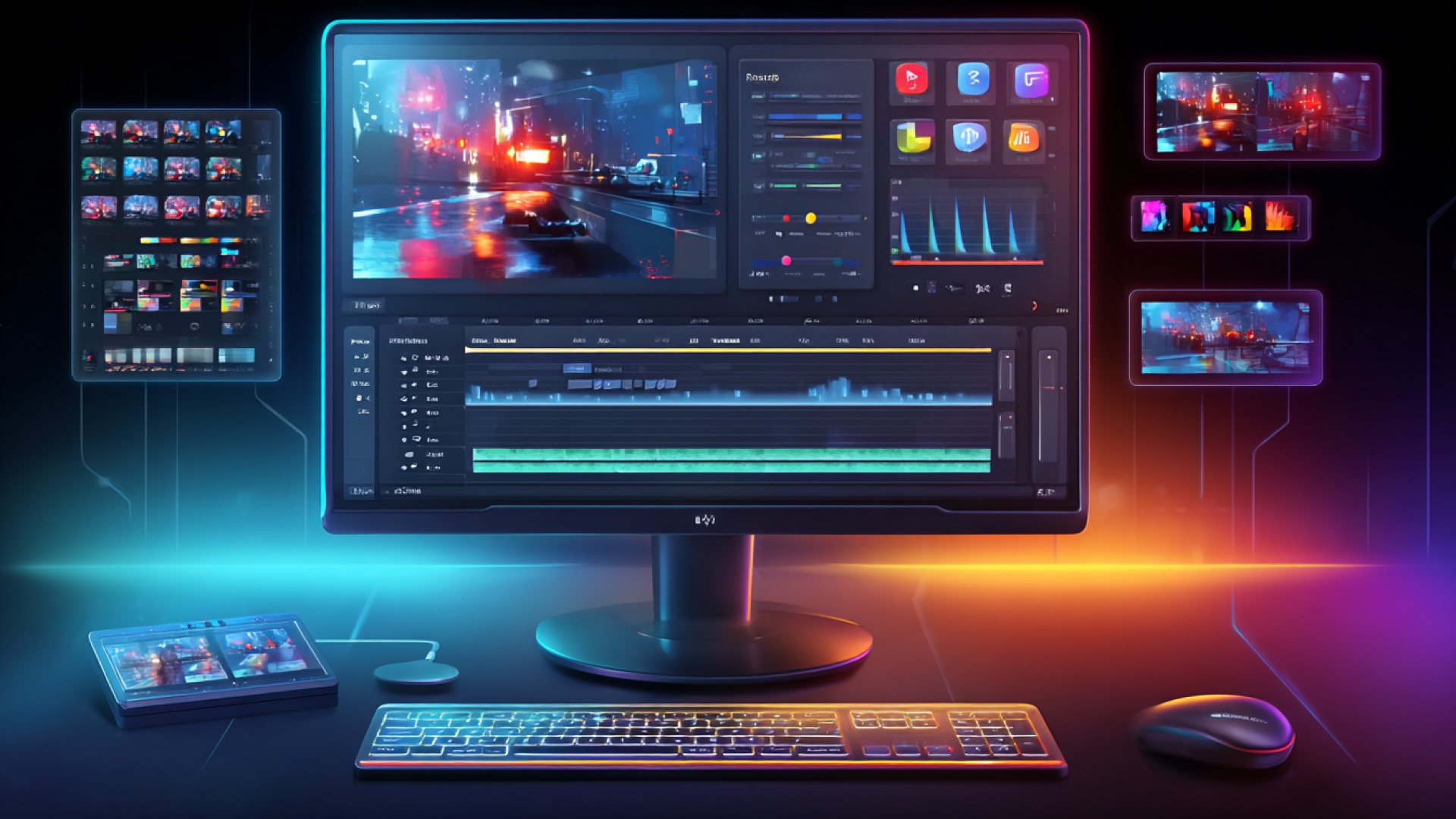
They don’t just speed up editing; they reshape the entire production process. By handling repetitive tasks and simplifying workflows, AI gives creators more space to focus on storytelling, visuals, and audience impact.
Here’s how AI makes each stage faster and smarter, with real-world examples:
1. Smarter Pre-Production
Pre-production often takes the most time, from planning scripts to mapping out scenes. AI accelerates this by:
- AI tools can generate scripts instantly from product descriptions, campaign briefs, or simple prompts. For example, a 500-word product brief can become a ready-to-shoot 60-second video script in minutes.
- Creating automated storyboards and scene breakdowns so teams know exactly what to shoot.
- Suggesting scenes aligned with objectives, like showing a customer using a product at home versus in an office.
- Summarizing research and pulling key insights to keep messaging clear and concise.
What used to take days of planning and multiple meetings can now be done in one focused session.
2.Production Workflows
Physical shoots can slow projects down with scheduling, locations, and crew coordination. AI removes many of these bottlenecks:
- AI avatars and synthetic presenters replace the need for on-set actors.
- Automated voiceovers in multiple languages let you create localized versions instantly.
- Virtual backgrounds and digital sets allow you to place a product demo inside a sleek office without building a set.
- Real-time scene rendering and smart camera suggestions make visual decisions faster and easier.
This means projects can move forward even without traditional shooting, dramatically cutting production delays.
3. Faster Post-Production
Editing is usually the most time-consuming phase, but AI reduces it significantly:
- Automatic scene detection highlights key moments, like the best product close-ups in a 10-minute raw video.
- Smart editing suggestions and transitions help craft polished videos quickly.
- Instant color correction ensures consistent visuals across scenes.
- Audio syncing, noise removal, and auto-generated captions save hours of manual work.
By automating these steps, post-production can be 40–70% faster, depending on complexity, without losing creative control.
Teams can produce high-quality videos faster, experiment with multiple ideas, and scale content easily. For example, a marketing team can launch a fully localized product demo in one day, something that traditionally took weeks.
Also Read: Guide to Social Media Video Production 2026
Challenges in AI Video Production Time and How Teams Overcome Them
AI can make video production faster, but efficiency depends on how smoothly your workflow runs. Even with automation, misaligned tools, teams, or processes can slow things down.
Spotting these challenges early helps keep AI-studios video production time consistent and projects on track.
1. Tool Setup and Workflow Fit
Introducing AI into your workflow takes planning. Without clear structure, teams may spend extra time aligning files, formats, and responsibilities, which can add delays.
Quick Fix: Start with one clear workflow before scaling. Define who handles scripting, editing, approvals, and publishing. Clear roles prevent confusion and keep timelines predictable.
2. Team Adaptation
AI tools move fast, but your team needs time to adjust. Inconsistent prompts or editing practices often lead to unnecessary revisions.
Quick Fix: Create simple guidelines for inputs, edits, and exports. A shared process helps the team work faster and reduces mistakes.
3. Balancing Speed with Creative Direction
AI handles repetitive technical tasks, but it cannot replace human judgment. Over-reliance on automation may result in videos that feel flat or off-brand.
Quick Fix: Build creative review checkpoints into the workflow. Let AI handle routine tasks while your team focuses on storytelling, tone, and brand voice.
4. Limits with Complex Storytelling
AI excels at structured formats like explainers, ads, and training videos, but projects with emotional depth or cinematic complexity may need extra attention.
Quick Fix: Use AI for speed where it adds the most value. For complex storytelling, combine automated workflows with hands-on creative oversight to maintain quality.
This approach helps teams keep AI-studios video production time fast while ensuring videos stay polished, consistent, and on-brand.
Also Read: Create Your Own AI Micro Drama Series
How AI-studios Speed Up Video Production: Benefits and Applications
AI-studios take care of repetitive tasks, simplify the production process, and reduce delays. This allows teams to focus more on ideas, storytelling, and creativity while still delivering high-quality, on-brand content.
Here’s how AI-studios transform video production and where they shine:
- Launch Campaigns Faster: No more waiting weeks for a campaign. AI lets teams turn concepts into ready-to-publish videos in hours, keeping content timely and relevant.
- Cut Costs Without Cutting Quality: Smaller crews, less studio time, and fewer reshoots mean production is more affordable, while the final videos remain professional.
- Test Ideas Quickly: Faster production means you can experiment with hooks, messaging, and formats without slowing down the workflow. Teams can see what works and iterate fast.
- Scale Video Output Easily: AI makes producing many videos simple, whether it’s for:
- Social media campaigns
- Training or onboarding content
- Product demos
- Localized content for global audiences
- Create Personalized and Updated Content: Generate multiple versions for different audiences, refresh training modules instantly, or publish short-form social videos in a single day. AI even helps turn product descriptions into polished demos quickly.
While traditional production is still ideal for cinematic projects or high-budget films, AI-studios deliver unmatched speed, flexibility, and efficiency for marketing, training, and large-scale content needs.
Also Read: How To Write A Video Script That Keeps Viewers Watching In 2026
The Future of AI-studios Video Production Time
The goal of modern video production is not just to save time. It is to create workflows where ideas flow smoothly from script to screen without pauses, rework, or delays.
Here’s what the future looks like:
- Real-Time Editing and Rendering: When you adjust a script line in a product demo, the visuals and voice update instantly instead of waiting for long render cycles. A feature change or pricing update can be reflected across the video within minutes.
- Automatic Multi-Platform Formatting: One master video can generate vertical 9:16 for short-form platforms, square 1:1 for feeds, and horizontal 16:9 for YouTube at the same time. A single campaign can be prepared for multiple channels in one workflow.
- Smarter Performance-Based Suggestions: If audience data shows viewers drop off early, the system can recommend shortening the intro or repositioning the key message. Editing becomes more informed and less trial-driven.
- Built-In Multilingual Production: A video created in one language can quickly generate additional language versions with synced voiceovers and subtitles. Global distribution becomes part of the same production cycle.
- Faster Testing and Iteration: Multiple variations of a headline, hook, or call to action can be created within hours. Teams can compare performance and refine messaging without restarting production.
AI-studios video production time is moving toward responsive, same-day creation and updates. The emphasis is not only on speed, but on building a production process that stays flexible, connected, and easy to manage.
How Frameo Improves AI-studios Video Production Time?
AI can generate videos quickly, but speed without coordination often creates gaps between scripting, editing, voice, and publishing. Frameo improves AI-studios video production time by connecting each stage into one continuous, streamlined workflow.
Here’s how that connectivity translates into measurable time savings:
- Connected Script to Screen Flow: Frameo converts scripts directly into structured storyboards and generation-ready video scenes. This removes disjointed handoffs between teams and allows you to review pacing, visuals, and messaging in one place before moving forward.
- Shot-Level Scene Editing: Each scene stays organized within a unified system. Instead of exporting, reimporting, and rebuilding timelines across tools, updates happen within the same workflow, keeping production aligned and efficient.
- Integrated Voice and Visual Sync: Voiceovers, dialogue, and visual elements are managed together. This reduces coordination delays between audio and editing teams and ensures timing adjustments happen instantly.
- Unified Collaboration and Version Control: Teams can review, edit, and approve within a connected environment. This avoids scattered feedback loops and shortens revision cycles that typically extend AI-studios video production time.
- Direct Platform Ready Output: Once finalized, videos export in platform-optimized formats without requiring separate formatting tools. The workflow stays connected from concept to publish.
By maintaining connectivity across scripting, editing, audio, and delivery, Frameo strengthens AI-studios video production time through continuity, clarity, and controlled execution.
Conclusion
AI-studios video production time is transforming how efficiently videos move from planning to final release. The shift is not about eliminating creative roles but about streamlining production steps that once slowed projects down.
The true impact lies in shorter timelines, faster updates, and easier content scaling. AI manages repetitive technical tasks, while creative vision and quality control stay in human hands.
As AI-studios continue to improve, the emphasis will remain on structured processes and flexible editing rather than complete automation. Teams that adopt AI video workflows with platforms like Frameo can achieve faster production while maintaining creative control and consistent storytelling.
Start using Frameo today and discover how optimized AI-studios video production time can help you deliver and scale video content with speed and control.
FAQs
1. How much faster is AI-studios video production time compared to traditional production?
AI-studios can reduce production timelines from several weeks to a few days. For structured content like explainers or ads, videos can even be completed within hours due to automated scripting, editing, and rendering.
2. What factors influence AI-studios video production time?
Timeline depends on video length, complexity, customization level, number of versions required, and approval cycles. Straightforward formats move quickly, while highly branded or story-driven projects may take longer.
3. Can AI-studios support fast revisions without delaying delivery?
Yes. Edits to scripts, visuals, avatars, or voiceovers can be updated and re-rendered quickly. This allows multiple iterations without restarting the entire production process.
4. Does reduced production time impact quality?
Not when managed correctly. AI handles technical precision such as color correction, audio syncing, and captioning, while creative teams ensure messaging and storytelling remain strong.
5. Is AI-studios video production time suitable for large-scale content needs?
Yes. AI-studios are ideal for enterprises producing onboarding videos, product demos, campaign variations, and localized content where speed, consistency, and scalability are critical.