Latest Film Production AI News: How AI Is Reshaping Filmmaking
Discover the latest film production AI news! Uncover trends, tools, and success stories in AI-driven filmmaking. Click to stay informed!
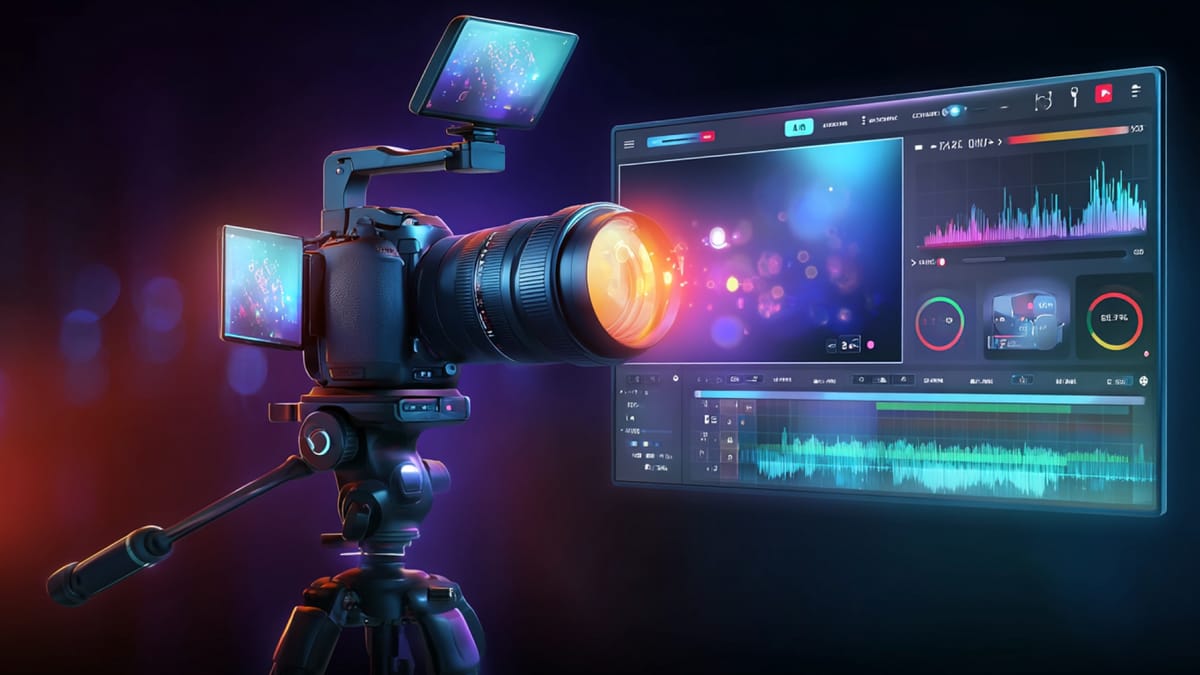
Last year, AI in film felt like experimentation. This year, it’s contract clauses, festival disclosures, union negotiations, and studio-level deployment decisions.
Producers are quietly testing AI for script breakdowns and previsualization. Editors are seeing automated rough cuts. Legal teams are reviewing training data and likeness rights before projects even go into production. Film production AI news is no longer about “what if.” It’s about who owns it, who controls it, and who gets credit when the film is finished.
If you’re building films, funding them, or experimenting with AI-native storytelling, these shifts aren’t background noise. They directly impact budgets, timelines, authorship, eligibility, and creative utilization. Let’s break down what’s actually happening and what it means for you.
Quick Overview
- Studios are deploying AI for script breakdowns, previs simulations, automated rough cuts, and synthetic dubbing to compress production timelines.
- The MPA has challenged AI video models over copyright risks, while BAFTA now requires AI disclosure to protect human authorship.
- Streamers and major platforms are embedding AI into development pipelines to reduce greenlighting risk and optimize trailer performance.
- Global markets are adopting AI differently, balancing cost efficiency with union negotiations and regulatory oversight.
- Legal uncertainty around training data, digital likeness rights, and insurance coverage remains the biggest constraint on full-scale AI adoption.
Current AI Trends Reshaping Filmmaking
AI in filmmaking is no longer limited to flashy generative demos; it’s reshaping how projects are greenlit, shot, edited, localized, and even insured. The most meaningful trends aren’t about replacing directors — they’re about compressing timelines, reducing risk, and increasing creative optionality.
Here’s where the shift is actually happening.
1.AI-Assisted Script Coverage and Greenlighting
Studios and streamers are using AI tools to analyze scripts before human coverage teams review them. These systems evaluate pacing, genre alignment, character arcs, and even projected audience appeal based on historical performance data.For producers, this means:
- Faster filtering of submissions
- Early identification of structural weaknesses
- Data-informed greenlight discussions
AI isn’t writing the final script, but it’s influencing which scripts move forward.
2.Real-Time Previsualization and Virtual Blocking
Directors are increasingly using AI-powered previs tools to simulate camera movement, lighting, and scene composition before stepping onto set. Instead of static storyboards, teams can test dynamic shot sequences in hours.
This reduces:
- Costly on-set experimentation
- Reshoots due to unclear visual planning
- Time spent aligning departments on visual intent
Previsualization is becoming a decision tool, not just a reference document.
3.Automated Post-Production Acceleration
Post-production is one of the most AI-disrupted phases in filmmaking right now.Trends include:
- AI-assisted rough cuts generated from script alignment
- Automated rotoscoping and background cleanup
- dialog isolation and noise reduction without ADR
- Smart color matching across multi-camera shoots
Editors are not being replaced, but repetitive tasks are being compressed significantly.
4.Synthetic Dubbing and Global Localization
Streaming platforms are investing heavily in AI dubbing and voice cloning to reduce localization delays. Instead of waiting months for manual voice recording in multiple languages, AI systems can generate region-specific audio tracks quickly.This is shaping:
- Faster global release windows
- Lower localization costs
- Broader international audience reach
Localization is shifting from post-release adaptation to launch-day strategy.
5.Digital Replicas and Performance Extensions
De-aging, digital doubles, and AI-assisted performance enhancements are becoming more normalized. What used to require heavy VFX pipelines is now partially automated.But this trend is tied directly to:
- Actor consent agreements
- Guild negotiations
- Digital likeness contracts
Technology is advancing faster than policy, and contracts are catching up.
6.AI in Marketing and Trailer Optimization
AI is also influencing how films are marketed.
Studios now:
- Test multiple trailer cuts using predictive engagement modeling
- Analyze viewer retention data to optimize teaser pacing
- Auto-generate cutdowns for social-first distribution
The trailer is no longer just creative, it’s algorithmically informed.
7.Lean AI-First Production Models
A new category of creators is building films with smaller crews by integrating AI at every stage: scripting assistance, digital environments, AI voice, and automated editing.This enables:
- Lower-budget genre experimentation
- Faster iteration cycles
- Direct-to-platform releases without traditional studio backing
It’s not just large studios adopting AI; it’s independent filmmakers leveraging it to compete.
What’s emerging isn’t automation of filmmaking roles, but a shift where AI handles production friction while creative decisions remain human-led.
The trend is clear: AI is embedding itself across the filmmaking lifecycle, from script intake to international release. Not as a single disruptive moment, but as a layered restructuring of how films are developed, produced, finished, and distributed.
Related Read: AI Film Production Workflow: A Practical Pipeline for Short-Form Video
How AI Is Changing Film Production Workflows?
AI is no longer a post-production add-on; it is being embedded directly into development, shooting, editing, and distribution pipelines.
Here’s how production workflows are structurally shifting:
- Development Is Becoming Data-Informed
- Scripts are screened using AI-powered breakdown tools before human coverage.
- Budget estimates are auto-generated from script elements like locations, cast size, and effects density.
- Genre and audience alignment are analyzed using historical performance data.
- Pre-Production Is Moving to Simulation
- Directors test camera angles and blocking through AI-assisted previs systems.
- Lighting conditions are digitally simulated before rental equipment is locked.
- Location scouting is supplemented with AI-generated environment mockups.
- Production Is Getting Hybridized
- Real-time AI tools assist with scene continuity checks.
- Automated transcription tools provide instant script-to-footage alignment.
- Virtual backgrounds reduce physical set dependency for certain sequences.
- Post-Production Is Compressing Timelines
- AI generates rough assemblies aligned with the screenplay.
- Dialogue cleanup and audio balancing are automated.
- Repetitive VFX tasks like rotoscoping are partially automated.
- Localization Is Becoming Simultaneous
- AI dubbing and subtitle generation begin before final export.
- Region-specific edits are created without reopening full project files.
- Voice models replicate tone while preserving performance pacing.
- Marketing and Distribution Are Data-Led
- Trailer variations are tested using predictive engagement analytics.
- Scene-level performance data influences promotional cutdowns.
- Platform-specific versions are exported automatically.
Instead of one disruptive tool replacing a department, AI is quietly rewiring how departments connect, accelerating decision-making while reshaping traditional production rhythms.
AI Tools Transforming Script Development, Editing, and VFX
AI tools are no longer experimental plug-ins; they are reshaping how scripts are structured, how edits are assembled, and how VFX tasks are executed under tight deadlines.
Here’s where a specific transformation is happening:
1.AI in Script Development and Breakdown
- Automated script breakdown tools now extract locations, props, cast requirements, and VFX density directly from screenplays within minutes.
- AI coverage systems analyze pacing, character arc distribution, and genre conformity before development executives review drafts.
- Dialogue refinement tools flag repetitive phrasing, tonal inconsistency, or structural sag in second acts.
- Predictive audience modeling is being tested by streamers to assess commercial viability before greenlighting.
2.AI-Assisted Editing and Rough Assembly
- AI systems align footage to screenplay structure and auto-generate rough cuts based on scene order and dialogue markers.
- Speech-to-text transcription tools allow editors to search footage by dialogue instead of manually scrubbing.
- Automated silence trimming and filler-word removal are reducing assistant editor workloads.
- AI-driven scene detection helps reorganize multi-camera footage into clean, categorized bins.
3.AI in Visual Effects and Cleanup
- Rotoscoping and object removal are now partially automated using segmentation models trained on motion tracking data.
- De-aging workflows combine AI facial reconstruction with traditional VFX pipelines for realism.
- Background extension and environment generation accelerate matte painting tasks.
- Crowd replication tools generate large-scale digital extras without manual duplication.
4.AI for dialogue, Dubbing & Audio Enhancement
- AI voice isolation tools extract clean dialogue from noisy on-set recordings without full ADR sessions.
- Synthetic dubbing models replicate actor tone across languages while preserving emotional cadence.
- Automated lip-sync alignment reduces post-production manual adjustment.
5.Narrative Prototyping With AI Video Platforms
- Story-first AI tools like Frameo allow creators to move from script to structured video sequences without traditional production crews.
- Character consistency systems maintain visual continuity across scenes and episodes.
- Conversational editing enables iterative scene refinement without reopening complex editing timelines.
The technology may accelerate production mechanics, but the creative authority of filmmakers remains the defining factor in how these tools are ultimately used.
AI is not eliminating scriptwriters, editors, or VFX artists; it is compressing their most time-intensive tasks, shifting creative focus from manual labor to narrative decision-making.
Related Read: Best AI Video Generator in 2026 for Content Creators
Institutional Shifts Around AI in Film
AI adoption in filmmaking is now triggering formal responses from studios, guilds, award bodies, and rights organizations. These are not opinion debates; they are policy updates, legal notices, and operational changes.
1.MPA vs. ByteDance: Copyright Conflict
- The Motion Picture Association reportedly issued a cease-and-desist to ByteDance over its AI video model Seedance 2.0.
- The dispute centers on potential copyright infringement tied to training data and output similarity.
- This signals Hollywood’s willingness to legally challenge generative video platforms.
- Studios integrating AI tools now face stricter IP vetting and compliance reviews.
2.Oscar Eligibility Rules for AI-Assisted Films
- The Academy confirmed that films using generative AI in areas like editing, VFX, or sound design remain eligible for Oscar consideration.
- Branch voters are instructed to evaluate the degree of human creative authorship, ensuring the primary artistic decisions come from human creators.
- AI-assisted techniques are assessed within each craft category, meaning directing, writing, editing, and VFX branches judge the creative contribution differently.
- For acting categories, voters evaluate the human performance delivered on screen, meaning heavily synthetic or fully generated performances may face scrutiny.
3.Cannes Film Festival AI Discussions
- The Marché du Film (Cannes Film Market) held panels discussing AI tools in filmmaking workflows.
- Industry leaders debated AI-generated visuals, virtual production, and copyright concerns.
- Discussions focused on how generative tools may reshape pre-visualization, VFX pipelines, and script development.
4.Amazon Expands AI Studio Workflows
- Amazon MGM Studios is developing internal AI tools under an initiative called AI Studio to accelerate TV and film production workflows.
- The AI Studio team, led by executive Albert Cheng, is building tools to reduce production costs and streamline parts of the creative process.
- Amazon plans to launch a closed beta program with industry partners in March to test these AI filmmaking tools.
- The studio says writers, directors, actors, and designers will remain involved throughout production, using AI as a supporting tool rather than a replacement
AI is no longer negotiating its place in film production; institutions are now actively defining its limits, responsibilities, and operational boundaries.
If you're exploring AI-powered storytelling while maintaining full creative control, platforms like Frameo help you move from script to structured video without compromising authorship.
Related Read: How AI Is Changing the Animation Industry
Real Challenges Facing AI in Film Production
While AI is accelerating parts of filmmaking, it is also exposing structural, legal, and creative friction points that studios and creators cannot ignore.
Here’s where the real pressure is showing up:
- Copyright disputes over training data continue to create legal uncertainty for studios integrating generative models.
- Actor likeness replication requires explicit consent frameworks and compensation models that are still evolving.
- Writers and directors face credit ambiguity when AI contributes to story structure or dialogue refinement.
- AI-generated visuals often lack nuanced emotional detail, requiring additional human correction in post-production.
- Insurance providers are reassessing risk coverage for AI-generated footage and synthetic performances.
- Data transparency remains inconsistent, making it difficult to verify how models were trained.
- Overreliance on automation risks homogenizing visual styles across projects.
- Smaller productions may lack the legal resources to navigate AI compliance complexities.
AI may accelerate production mechanics, but unresolved legal, ethical, and creative constraints will ultimately determine how far and how fast it reshapes filmmaking.
Why Frameo Is a Practical AI Solution for Filmmakers?
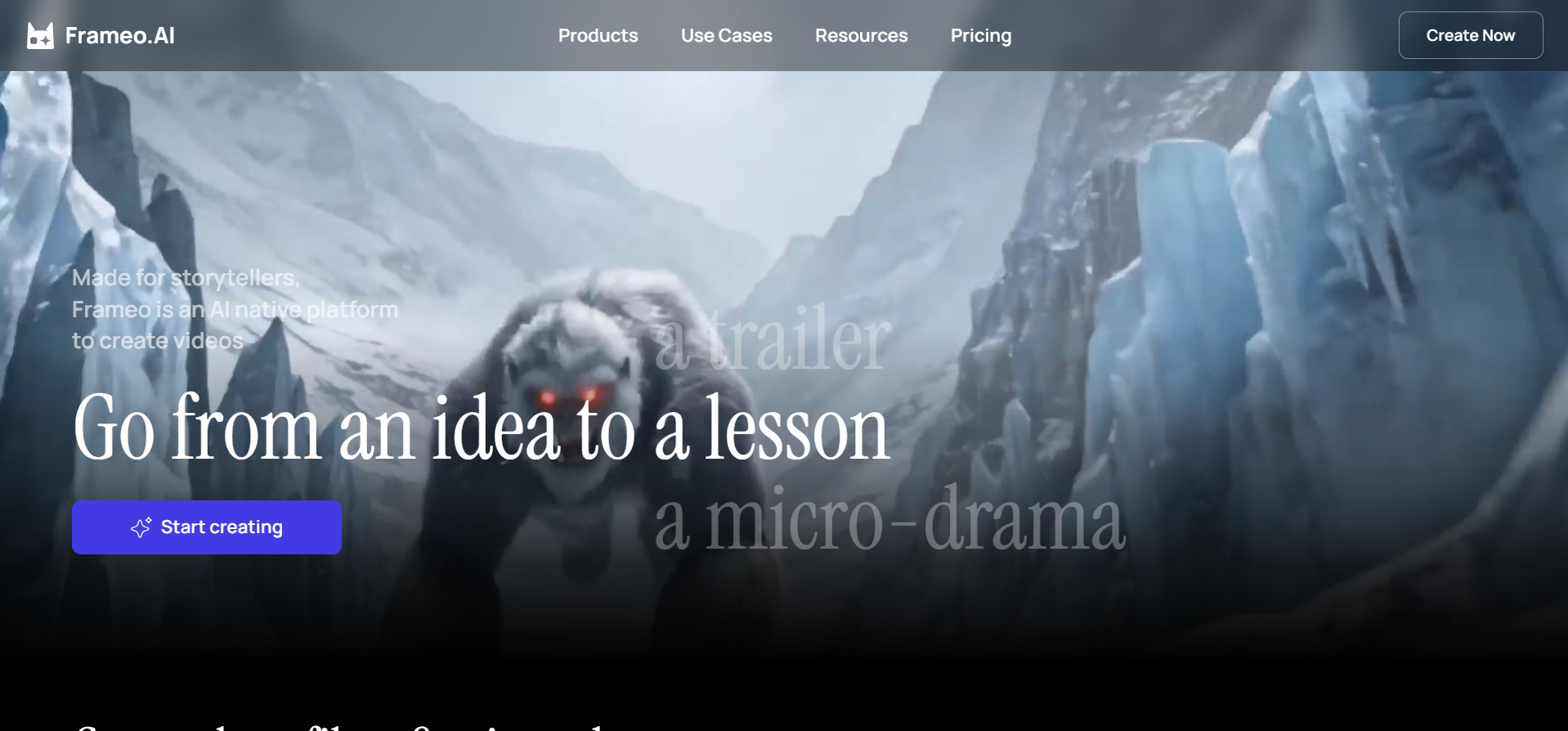
Platforms like Frameo illustrate how newer AI-native production tools are compressing scripting, storyboarding, and video assembly into a single workflow.
Here’s how Frameo directly addresses real production challenges with its own product capabilities:
- Text-to-Video Narrative Creation: Frameo turns written scripts or scene descriptions into fully structured videos with cinematic pacing and motion, no camera, crew, or timeline editing required.
- Script-Driven Storyboarding Tools: AI storyboarding inside Frameo helps creators visualize scenes and sequence arcs before filming or full production begins.
- Automated Vertical & Social-Ready Output: Frameo generates videos optimized for vertical formats like Reels, Shorts, and TikTok, eliminating manual resizing and formatting steps.
- AI Voiceover and Caption Sync: Built-in voice generation, dubbing, and automatic captioning enhance accessibility and reduce post-production labor.
- Audio-to-Visual Conversion: Frameo’s audio-to-video feature turns podcasts, narration, or voice files into engaging visual content in minutes.
- Product & Promo Video Maker: Its AI product video tool lets you type or upload script details to generate polished promotional clips instantly.
Frameo’s no-code, prompt-based workflow lets filmmakers, studios, and creators reduce manual edits, iterate faster, and produce polished narrative videos while keeping creative control, solving many of the production bottlenecks being highlighted in film production AI news.
Wrapping Up
AI’s influence on film production is no longer speculative or experimental; it is actively reshaping how projects are developed, financed, produced, localized, and evaluated. From studio workflow acceleration to legal battles over copyright and likeness rights, the industry is negotiating how innovation fits within long-standing creative and contractual frameworks.
For filmmakers and AI-native creators, the real shift is practical: production timelines are tightening, localization is becoming simultaneous, and institutional rules are evolving. The advantage will belong to teams who understand both the technological upside and the regulatory boundaries shaping this transition.
Start building structured, story-driven videos with full creative control using Frameo’s platform.
FAQs
1.How is AI currently used in film production?
AI is used for script breakdowns, automated editing assistance, VFX cleanup, dubbing, previsualization, and marketing optimization across production pipelines.
2.Are film festivals allowing AI-generated content?
Yes, but most major festivals now require disclosure of AI usage and still prioritize human creative leadership for eligibility.
3.Is AI replacing filmmakers and editors?
AI is accelerating repetitive and technical tasks, but creative decision-making, direction, and storytelling remain human-led.
4.What are the biggest legal concerns around AI in film?
Copyright over training data, actor likeness replication rights, authorship credit, and licensing transparency are the primary legal concerns.
5.Will AI reduce film production costs?
In many cases, yes, particularly in post-production, localization, and previsualization, but legal compliance and oversight may introduce new cost considerations.