Future of Content Creation: 2026 Trends & Predictions
Explore the future of content creation with AI, short-form video, and mixed realities. Discover key trends reshaping digital storytelling now. Click to learn more!
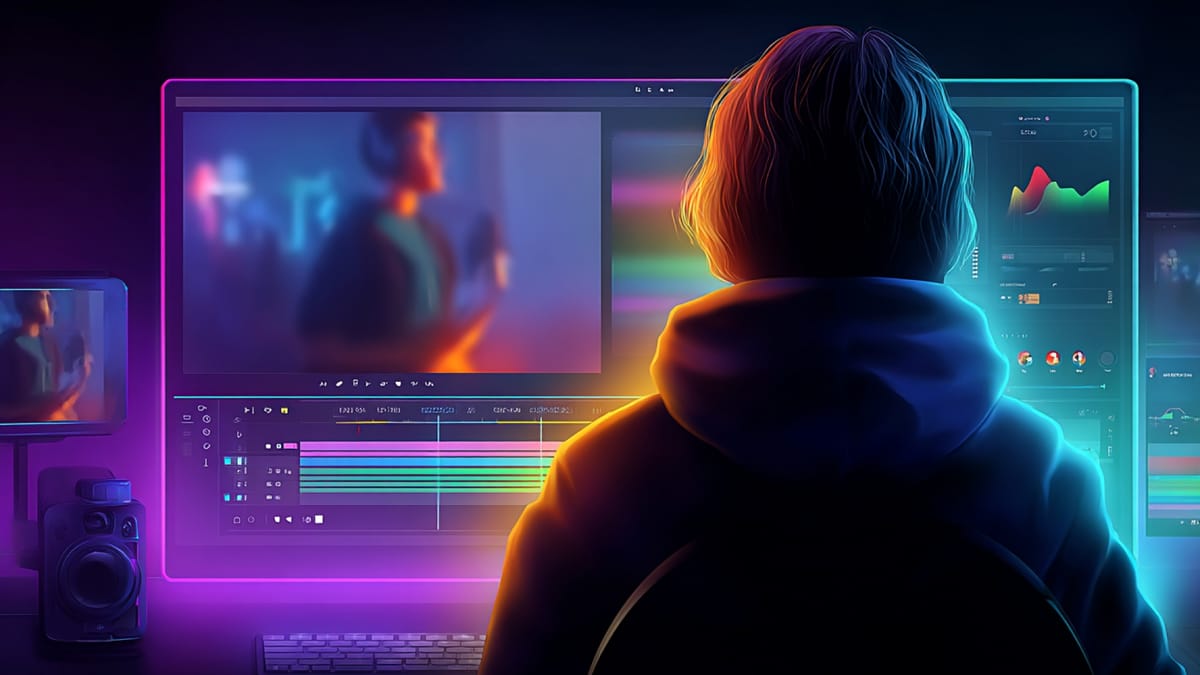
Content creation is entering a new phase. What once relied heavily on manual effort, long production cycles, and specialized skills is now being reshaped by faster workflows, new formats, and AI-powered tools. Creators and marketers can ideate, produce, and publish content at a scale that was previously limited to large teams and studios.
This shift is not just about speed. Audience behavior has changed alongside technology. Short-form video, vertical formats, and platform-native storytelling now dominate how people discover and consume content. At the same time, expectations around relevance, quality, and consistency are higher than ever. Creating more content is no longer enough; content must be timely, engaging, and tailored to where it appears.
When people talk about the future of content creation, they are really talking about how creativity, technology, and distribution are converging. AI is becoming part of everyday workflows, formats are evolving toward faster and more visual storytelling, and creators are expected to adapt quickly without losing their voice or quality.
This blog explores the key trends shaping the future of content creation, what they mean for creators and small teams, and how to prepare for what comes next, practically, not theoretically.
TL;DR / Key Takeaways:
- The future of content creation is about systems, not just tools. Creators who build repeatable, AI-assisted workflows will scale faster than those chasing individual platforms.
- AI changes where creativity happens. Execution is automated; creative advantage now comes from taste, context, and narrative judgment.
- Short-form, platform-native video is the default format. Content performance depends more on format fit and hooks than length or production polish.
- Personalisation at scale is no longer optional. Audiences expect content to feel native to each platform and relevant to their interests.
- Quality and governance become critical as AI output increases. Speed without consistency, accuracy, and trust erodes long-term audience value.
What the Future of Content Creation Really Means
When people discuss the future of content creation, the conversation often jumps straight to tools. AI, automation, and new platforms get most of the attention. But the future is less about individual technologies and more about how content is created, shaped, and delivered end to end.
At its core, the future of content creation is defined by three shifts happening at the same time.
First, creation is becoming workflow-driven instead of task-driven. Creators are no longer writing, editing, designing, and publishing in isolation. Ideas now move through connected systems where scripts turn into visuals, visuals turn into video, and outputs are adapted automatically for different platforms.
Second, content is becoming format-native. Instead of creating one asset and resizing it everywhere, creators are designing content specifically for where it will live, vertical video for mobile feeds, short clips for fast scrolling, and highly visual storytelling for social platforms.
Third, scale and consistency are becoming equally important. Audiences expect frequent content, but they also expect it to feel intentional and recognizable. This means creators need systems that help them produce more without losing quality, tone, or identity.
Together, these shifts explain why the future of content creation is not about replacing creativity with AI. It’s about augmenting creative work, reducing manual friction, and allowing creators to focus more on ideas, storytelling, and direction rather than execution.
Trend 1: AI Becomes Central to Content Workflows
AI is no longer an add-on to content creation. It is becoming part of the core workflow, supporting creators from the earliest idea stage through to final output.
In the future of content creation, AI acts less like a tool you occasionally use and more like a creative assistant that works alongside you. It helps generate concepts, structure stories, create visuals, produce videos, and adapt content across formats.
This shift is visible in how creators are already working today:
- Ideas are turned into scripts or outlines faster using AI assistance
- Visuals and scenes are generated from text instead of manual design
- Video and voice are created without traditional recording setups
- Content is repurposed automatically for multiple platforms
As AI becomes more integrated, the creative role shifts. Creators spend less time executing repetitive tasks and more time making decisions, such as what story to tell, how it should feel, and where it should be published.
Importantly, this does not remove the need for human creativity. Instead, it changes where creative effort is applied. In the future of content creation, originality comes from direction, taste, and context, while AI handles speed and production.
Also read: AI and Automation for Digital Marketing and Content Creation
Trend 2: Short-Form Video Becomes the Default Format
Short-form video is no longer just a trend; it is becoming the baseline format for content creation. Across platforms, audiences are spending more time with vertical, fast-paced videos than with long articles, static images, or traditional long-form video.
This shift is driven by how people consume content today. Feeds are scroll-based, attention spans are fragmented, and discovery is algorithm-led. Short videos fit naturally into this environment because they deliver value quickly and are easy to consume on mobile devices.
As a result, the future of content creation is increasingly video-first, especially for creators and brands that rely on organic reach.
Several changes follow from this:
- Content is designed to make an impact within the first few seconds
- Vertical (9:16) formats are prioritized over horizontal layouts
- Storytelling is compressed into short, high-signal moments
- Visual clarity and pacing matter more than polish or production scale
For creators, this means thinking differently about how stories are told. Instead of building long narratives from start to finish, short-form video focuses on hooks, quick context, and clear takeaways. Even complex ideas are broken into small, digestible pieces that can stand on their own.
In the future of content creation, success will depend less on how long content is and more on how well it fits the platform and audience behavior it’s designed for.
Also read: 5 Best AI Video Creator for Instagram Reels
Trend 3: Personalisation at Scale Becomes an Expectation
As content volume increases, generic messaging becomes easier to ignore. Audiences now expect content to feel relevant, tailored to their interests, preferences, and the platform they’re using.
This is where personalisation becomes central to the future of content creation.
AI makes it possible to adapt content at scale without manually creating dozens of variations. Creators can adjust tone, visuals, pacing, and messaging for different audiences while working from the same core idea.
In practice, this means:
- The same story can be told differently across platforms
- Messaging can be tuned for different audience segments
- Visual styles and formats can shift without rebuilding content from scratch
Personalisation does not mean making everything unique. It means making content context-aware. When content feels native to where it appears, it performs better and builds a stronger audience connection.
For creators and small teams, this shift levels the playing field. Tools that support personalisation allow them to compete with larger organizations without needing large production or marketing teams.
Also read: Best AI Tools for Product Marketing in 2025
Trend 4: Collaboration and Cloud-Based Workflows Shape Creation
The future of content creation is increasingly collaborative, even when teams are small or distributed. Cloud-based tools and shared workflows allow ideas, drafts, and assets to move quickly between people without long handoffs or version confusion.
This matters because modern content creation rarely happens in isolation. A single piece of content may involve:
- A creator or writer shaping the idea
- A marketer refining messaging
- A reviewer checking quality or accuracy
- A publisher adapting it for different platforms
When workflows are disconnected, friction increases. When they are shared and cloud-native, iteration becomes faster and clearer.
As content production scales, creators who adopt collaborative workflows early will find it easier to maintain consistency, respond to trends, and keep quality high without slowing down.
Trend 5: Mixed Media and Immersive Formats Gain Momentum
While short-form video dominates today, the future of content creation will also include more mixed media and interactive formats. Audio, animation, visual storytelling, and interactive elements are increasingly blended into single experiences.
This does not mean every creator needs to build immersive experiences. It means content is becoming richer and more layered. Voice, motion, and visuals work together to communicate ideas faster and more emotionally.
Key shifts include:
- Voice-driven storytelling alongside visuals
- Animated and stylised content replacing static imagery
- Interactive elements that invite participation rather than passive viewing
As these formats mature, creators who are comfortable working across media, not just text or images, will be better positioned to adapt.
Also read: AI Animation Tools: Compare Features and Pricing
Trend 6: Quality, Governance, and Responsibility Matter More at Scale
As content creation becomes faster and more automated, quality and responsibility move to the forefront. When creators can generate content in minutes, the real differentiator is no longer volume; it is consistency, accuracy, and trust.
In the future of content creation, audiences will be exposed to more AI-assisted content than ever before. This makes it easier for low-quality, repetitive, or misleading content to spread. Platforms are responding with stricter policies, and audiences are becoming more selective about what they engage with.
This is why lightweight governance becomes part of modern content workflows. Not governance in the enterprise sense, but clear internal rules that define what is acceptable to publish.
For creators and teams, this typically means:
- Setting minimum quality standards for visuals, audio, and messaging
- Reviewing content that makes claims or uses voice and likeness
- Being transparent when AI is used in ways that matter to audiences
- Avoiding shortcuts that compromise credibility for speed
In the future, creators who combine speed with responsibility will build more durable audiences than those who chase volume alone.
What These Trends Mean for Creators and Small Teams
Taken together, these trends point to a future where creators and small teams have more power, but also more responsibility.
The barriers to entry are lower. AI tools make it possible to produce professional-looking content without large budgets or specialized skills. At the same time, the margin for error is smaller. Audiences compare content instantly, and platforms reward consistency and relevance.
For creators, this means:
- Creative direction matters more than manual execution
- Systems and workflows matter as much as talent
- Understanding formats and platforms is essential
- Speed must be paired with intention
Small teams and independent creators are no longer competing on production scale. They are competing on clarity, storytelling, and how well they adapt to changing formats.
Where Frameo Fits in the Future of Content Creation

As content creation becomes faster, more visual, and more AI-assisted, the role of tools is changing. The most valuable tools in the future of content creation are not just those that generate output quickly, but those that help creators build repeatable, structured workflows without sacrificing quality or creative intent.
This is where platforms like Frameo fit into the broader shift outlined above.
Frameo is designed for the realities of modern content creation: short-form, vertical, platform-native video produced at speed. Instead of treating video creation as a traditional editing task, Frameo approaches it as a story-driven workflow, where ideas move from text to scenes to finished video in a structured way.
In practice, this aligns closely with the trends shaping the future of content creation:
- AI as part of the core workflow
Frameo integrates AI directly into the creation process, helping creators turn prompts, scripts, or ideas into complete short videos without manual editing or design-heavy steps. - Short-form, video-first creation
All outputs are built for vertical, mobile-first formats, making them immediately usable for Reels, Shorts, and TikTok, where content consumption is already concentrated. - Personalisation without rebuilding from scratch
By allowing creators to adjust scenes, visuals, voice, and pacing through prompts, Frameo supports adapting the same idea across formats, audiences, or platforms. - Consistency and lightweight governance by design
Structured storyboards, scene previews, faceless workflows, and integrated voice tools make it easier to review and refine content before publishing, supporting quality and responsibility at scale.
Rather than replacing creative judgment, tools like Frameo reduce execution friction. This allows creators and small teams to focus more on storytelling, direction, and audience fit, the areas where human creativity continues to matter most.
How to Prepare for the Future of Content Creation
Preparing for the future of content creation does not require predicting every new tool or platform. It requires building habits and workflows that are flexible and resilient.
A practical way to prepare includes:
- Adopt AI as a collaborator, not a shortcut
Use AI to handle production and repetition while you focus on ideas and direction - Design content for platforms, not templates
Create with vertical, short-form, and mobile-first formats in mind - Build simple systems early
Clear standards, review steps, and reusable structures prevent chaos later - Experiment continuously, but measure outcomes
Test formats, hooks, and narratives, then double down on what resonates - Stay audience-led
Tools will change, but audience expectations around relevance and quality will not
Creators who approach the future with this mindset will be able to adapt as tools evolve, rather than constantly starting over.
Conclusion
The future of content creation is not defined by a single technology or platform. It is shaped by how creativity, AI, and distribution come together to make content faster, more visual, and more adaptable to changing audience behavior.
AI will continue to transform workflows. Short-form, platform-native video will remain central. Personalisation will become an expectation rather than a differentiator. At the same time, quality, consistency, and responsibility will matter more as content volume increases.
For creators and teams, the opportunity is clear. Those who build systems instead of chasing individual tools, and who use AI to support, not replace, creative judgment, will be best positioned to scale without losing their voice.
Start creating with Frameo today and turn ideas into structured, cinematic, vertical videos, built for speed, consistency, and the future of content creation.
Frequently Asked Questions (FAQs)
1. What Is the Future of Content Creation?
The future of content creation is increasingly AI-assisted, video-first, and platform-native. It focuses on faster production workflows, short-form formats, and content tailored for specific platforms and audiences.
2. How Is AI Changing Content Creation?
AI is changing content creation by automating ideation, scripting, visual generation, video production, and repurposing. This allows creators to focus more on creative direction, storytelling, and strategic decisions.
3. Will AI Replace Content Creators?
No, AI will not replace content creators. While AI handles repetitive and production-heavy tasks, human creativity, judgment, and storytelling remain essential for originality and audience connection.
4. Why Is Short-Form Video Important for Content Creation?
Short-form video is important because it aligns with mobile-first consumption, shorter attention spans, and algorithm-driven discovery on platforms like Instagram, YouTube, and TikTok.
5. Can Small Creators Compete With Large Teams in the Future?
Yes, small creators can compete because AI tools reduce production costs and complexity. This allows individuals and small teams to create high-quality, scalable content without large budgets.